
The IAF's future operational concepts could involve indigenous Tejas combat aircraft coordinating in real time with multiple Ghatak RPSAs, each carrying a different mission payload ranging from electronic warfare systems and targeting sensors to precision munitions.
Once operational, Ghatak could undertake deep-strike missions, penetrating heavily defended airspace to hit high-value targets without placing pilots at risk.
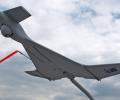
The Israeli-made Harop drone is a powerful weapon that can operate silently in enemy territory and carry a significant payload.

In the India-Pakistan situations, off-ramps have come either through foreign mediation (after months of kinetic warfare over Kargil, and a long stand-off with Op Parakram) or when a situation made it possible for both sides to claim a win, explains Shekhar Gupta.

Iran is fighting a different war: Older, slower, and in some ways more dangerous. Iran doesn't need to shoot down an F/A-18. It only needs to make the Strait of Hormuz feel dangerous long enough for insurance markets, shipping companies, and oil futures traders to do the rest. Prem Panicker continues his must-read daily blog on the war in the Middle East.

The question is no longer whether the war will expand. It has. The next few days will tell us whether the war stabilises around Hormuz or whether the Strait itself becomes the trigger for a far larger rupture. What to watch for over the next 48 hours is simple: Any move by the US toward direct naval control of the Strait; any credible Iranian attempt to disrupt or mine shipping lanes and, critically, whether energy infrastructure in the Gulf continues to be targeted.If those lines are crossed in tandem, the war will no longer be containable within the region.

The Chinese see no need to fight directly. They have an able and willing proxy in Pakistan, points out Shekhar Gupta.
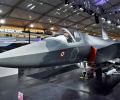
If I were to explain stealth to a layperson, I'd ask them to think of the game chupan-chupai (hide and seek) we played as children, explains Air Commodore Nitin Sathe (retd).
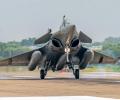
'Rafales can play an important role in doing DEAD (Destruction of Enemy Air Defence) on the Surface-to-Air Missiles that the Chinese have put on Tibet'
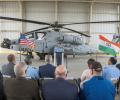
Its advanced Longbow radar picks up enemy armoured vehicles and then destroys them with anti-tank missiles, air-to-surface rockets or a chain gun that sends 625 rounds per minute ripping into the targets.

Lt. Vinay Narwal, an Indian Navy officer, was killed in a terrorist attack in Pahalgam, Kashmir, while on his honeymoon. His family, friends, and political leaders mourned his loss, describing him as a brave soldier and a promising young man. The attack sparked widespread condemnation and calls for retribution.

How scrap material became a magnificent Rudra Veena... How children learnt about animals, the real way... How the BRO is strengthening India...

'The sky is the limit for what all could be done at an air base to neutralise terrorists. Good proactive local leadership and delegated operational effort would be key to ensuring that a handful of terrorists cannot hold a whole air base, and by extension, the whole nation to ransom,' says Group Captain P I Muralidharan (retd).
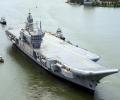
The MiG29K and MiG29KUB, the aircraft carrier's primary fighters, spent more time in the hangar than in the air, with fleet serviceability remaining below 50 per cent, reports Ajai Shukla.

'Large-impact aerial weapons have no use against dictator regimes or terrorist entities,' says Group Captain Murli Menon (retd).
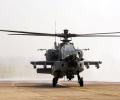
The AH-64E Apache is one of the world's most advanced multi-role combat helicopters, and is flown by the US army.
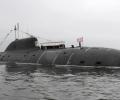
The second SSN that India is negotiating to lease from Russia will only replace the Chakra, when its 10-year lease expires, reports Ajai Shukla.
